A buyer under contract on a Lincolnville bungalow got two phone calls in the same week last spring. The first was from her insurance agent, who wanted to know the roof's age before he could finish a quote. The second was from a contractor she'd hired to look at a sagging side fence, who mentioned, almost in passing, that replacing it in-kind was probably fine but swapping the style would mean a trip through the city's preservation board first. She had assumed, reasonably, that buying an old house in St. Augustine meant clearing one hurdle: the historic designation. She was actually clearing two, and they don't run on the same clock or the same logic.
That distinction is the thing most buyers don't grasp until they're already past their inspection period. St. Augustine's Historic Architectural Review Board decides what a house is allowed to look like. An insurance underwriter decides what a house is allowed to cost to protect. One cares about material and appearance. The other cares about age and physical risk. A property can sail through one and stall hard on the other, and the place where they collide most often is the roof.
A new permit rule that sounds like less oversight, and isn't
Starting July 1, 2026, the City of St. Augustine no longer requires a building permit for improvements under $7,500 on single-family homes. It's a real change, and it's easy to misread as a general loosening of the rules for older properties. It isn't. Electrical, plumbing, mechanical, gas, structural work, and anything in a flood-hazard area still needs a permit no matter the price tag, and the exemption explicitly does not remove HARB, Planning and Zoning, or archaeology review requirements. You also can't break a project into smaller invoices to duck under the threshold. If you want to use the exemption, you file a land development application and a written request with supporting documents before you start, and if you skip that step and start anyway, your eventual permit fees double.
For a buyer weighing cosmetic work on a historic property, the practical read is this: the city made small jobs faster to permit, not faster to approve. If the work touches anything visible from the street in one of the city's five Historic Preservation zoning districts, HARB still has a say, exemption or not.
What the review board is actually deciding
Most exterior work inside an HP-1 through HP-5 district needs a Certificate of Appropriateness, reviewed against the city's Architectural Guidelines for Historic Preservation. A Certificate of Appropriateness is also a precondition for the building permit itself, not a parallel track you can finish later. Buyers sometimes hear about an Opinion of Appropriateness and assume it's a faster lane. It's the opposite of a shortcut. An Opinion is an optional, earlier conversation for a project that isn't fully designed yet, useful for getting board direction before you commit to drawings, but approval of an Opinion doesn't approve the project. You still need the Certificate.
There's one meaningful exception worth knowing before you budget a renovation timeline: if you're replacing an architectural feature with an exact match in material, dimension, and design, that can sometimes be approved administratively, without a full board hearing. Change the material, the shape, or the placement, and you're back in front of HARB, which meets once a month, typically the third Thursday at 1 p.m. in the Alcazar Room at City Hall. Miss a submission deadline and your timeline just picked up a month.
A second gate, running on different rules
None of that preservation machinery has anything to do with whether an insurer will write you a policy. Carriers are underwriting physical risk, and in St. Augustine's older housing stock, three things tend to matter most: roof age, construction date relative to Florida's 2002 building code update, and flood zone.
| HARB review | Insurance underwriting | |
|---|---|---|
| Triggered by | Visible exterior change in an HP district | Property age, roof condition, flood zone, prior claims |
| Reviewer | Historic Architectural Review Board, monthly meeting | Individual carrier underwriters |
| Based on | Material, design, historic character | Physical condition, storm and flood exposure |
| Approves | Whether the work can be done | Whether the house can be insured, and at what price |
Many carriers won't write a policy on a roof older than 15 to 20 years, full stop. For homes built before March 1, 2002, a wind mitigation report often becomes the difference between a workable premium and a declined application, since that's the date Florida's stricter wind-resistant construction standards took hold. A four-point inspection, covering roof, electrical, plumbing, and HVAC, typically gets requested once a property crosses 25 to 30 years old, a threshold that's tightened over time. Confirmed asbestos can disqualify a home from coverage with some carriers outright. None of this has anything to do with whether the house sits in a historic district. A 1920s cottage and a 1998 concrete block home get evaluated by the same underwriting logic if their roofs are the same age.
Flood adds its own layer. St. Augustine sits low against the Matanzas River, the Intracoastal Waterway, and the Atlantic, and the city has documented that roughly 90 percent of residents live within a floodplain, with repeated inundation in Davis Shores, Lincolnville, the Historic District, and the Abbott Tract during storms like Matthew and Irma. Zone AE and Zone VE designations, VE carrying the added risk of coastal wave action, show up in high concentrations across the Historic District and Anastasia Island. Flood coverage is a separate policy from homeowners insurance, since a standard policy doesn't cover flood damage at all, and it typically runs $1,500 to $4,500 a year in high-risk zones, on top of a homeowners premium that commonly lands between roughly $2,800 and $5,500 or more for older or waterfront stock in this county. A citywide average premium figure, and there's one circulating that puts St. Augustine well below the statewide average, is real but misleading for this specific buyer, because it's pulled down by newer, inland, better-mitigated homes elsewhere in the county. It isn't describing the house you're touring on Cordova Street.
Where the two systems actually collide
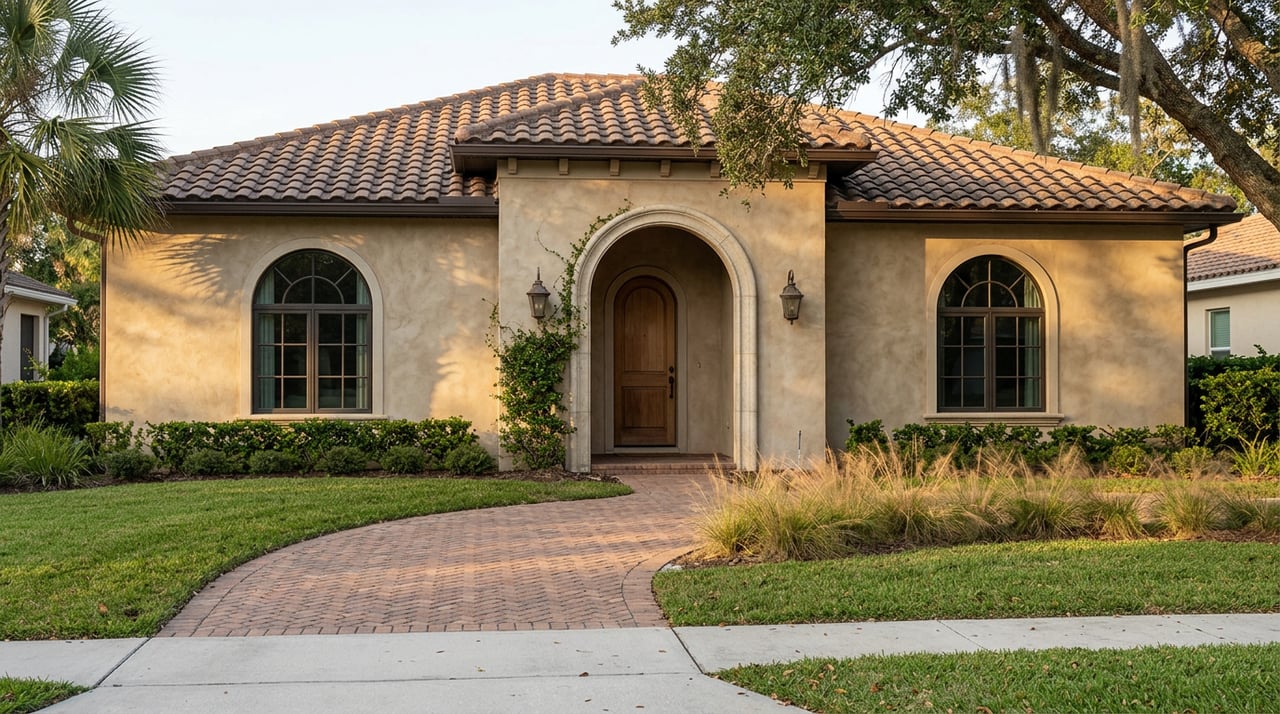
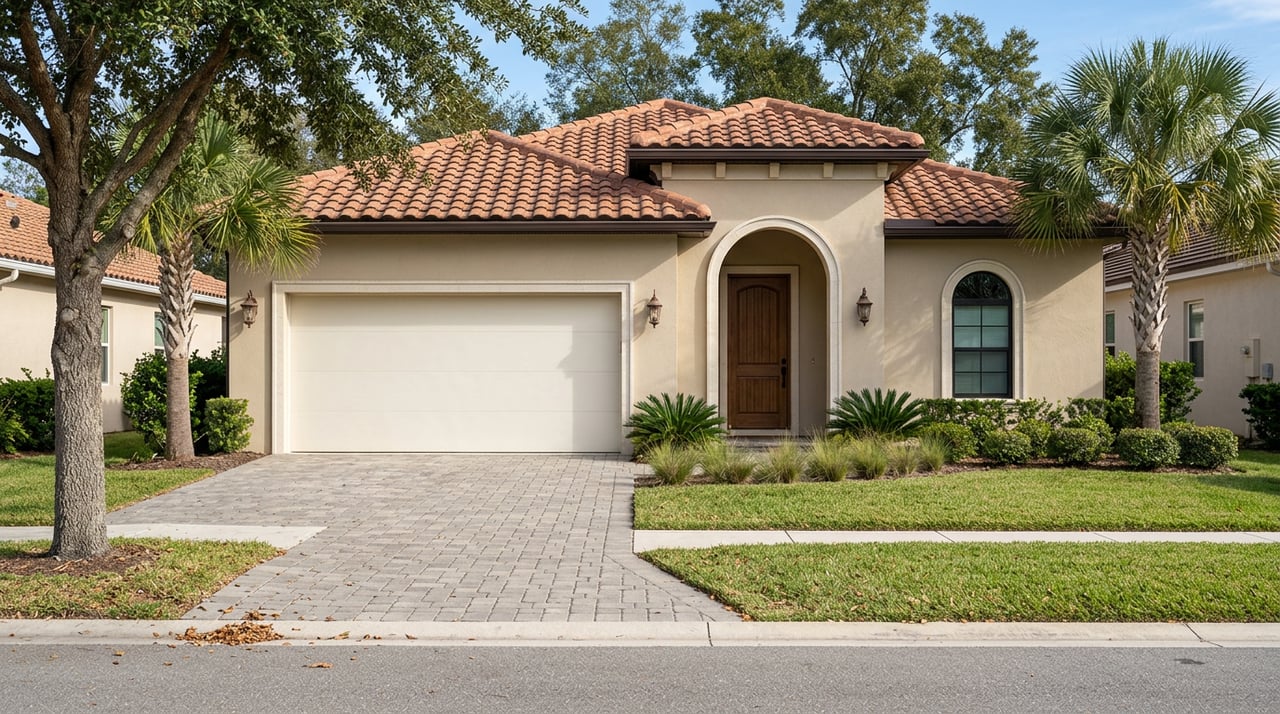
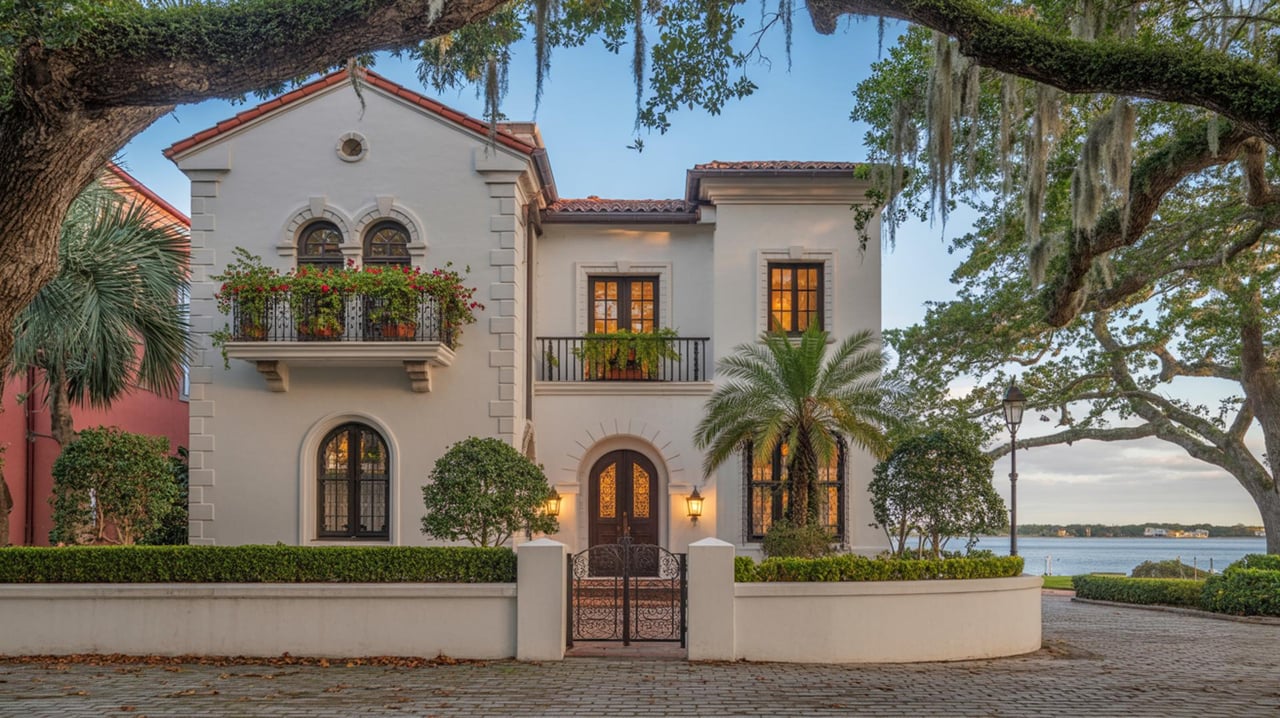
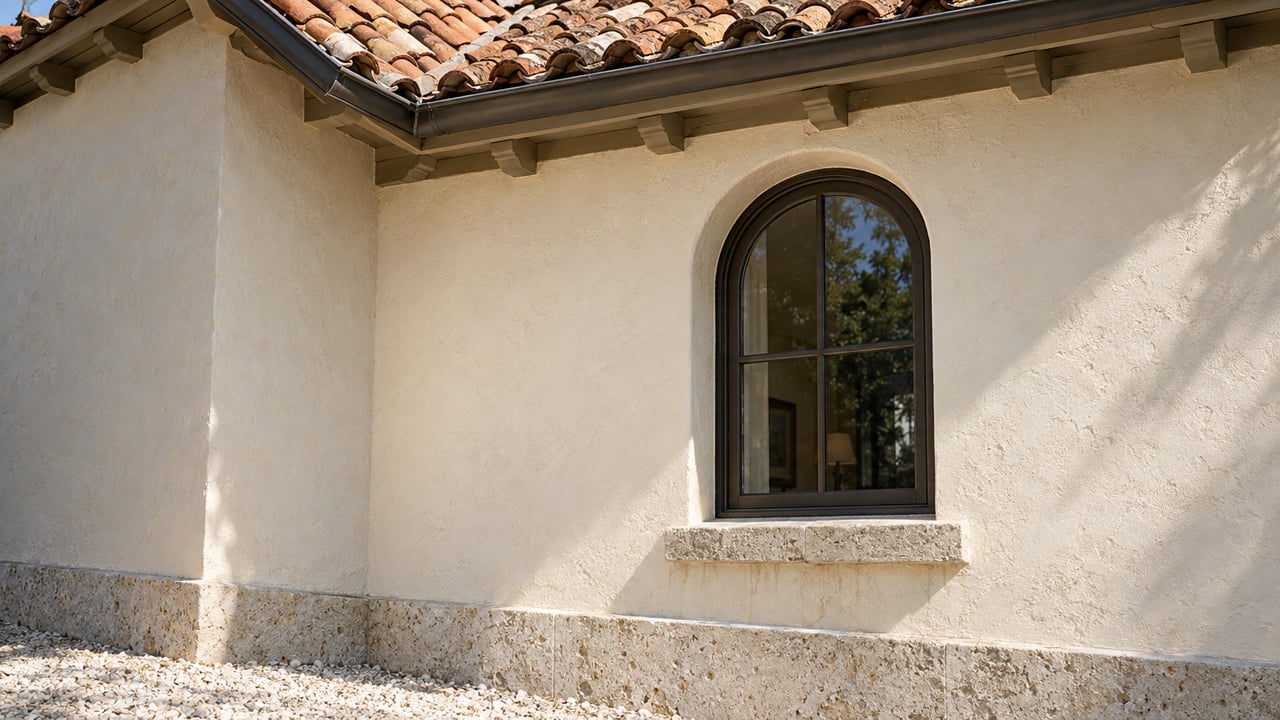
This is the part that catches people off guard. Say the roof on the historic home you're buying is 22 years old. Your insurer wants it replaced, or at minimum wants a wind mitigation report and possibly a four-point inspection, before finalizing a quote you need to close. Fine, you think, you'll just get it replaced. But if that roof is barrel tile, a material the city's own guidelines treat as central to the historic character of these buildings, an in-kind replacement using the same tile and profile may qualify for administrative sign-off. Any deviation in material or design sends you to HARB, on their monthly schedule, with a submission deadline you may have already missed by the time your inspection period closes.
The buyer who avoids the scramble is the one who starts both conversations during due diligence, not after closing. That means pulling up the zoning district for the specific address using the city's interactive GIS map before writing an offer, since HP-1 through HP-5 carry different levels of scrutiny and not every historic-feeling street sits in the same tier. It means asking the seller directly for a wind mitigation report, a four-point inspection if the home qualifies, an elevation certificate if one exists, and their current insurance carrier and premium, rather than discovering the roof's real age from an underwriter three weeks before closing. And if any exterior work beyond an exact in-kind fix is part of the plan, it means a call to the city's Historic Preservation staff before the offer is signed, not after, so a Certificate of Appropriateness application is already moving before the insurance and mortgage clocks start running out.
A few questions worth settling before you write the offer
Does an in-kind roof replacement still need board approval? Often it can be handled administratively if the material, dimensions, and design match what's already there. Change any of those and it goes to the full board.
Should I price flood insurance if my flood map shows Zone X? Standard homeowners coverage never includes flood damage regardless of zone. Given how much of St. Augustine sits in a floodplain overall, it's worth pricing a policy.
Does the new $7,500 permit exemption mean I can skip HARB for small projects? No. The exemption removes the building permit requirement for qualifying low-cost work. It does not remove HARB, archaeology, or flood-hazard review, and those still apply based on the project and the zoning district, not the price tag.
A historic address in St. Augustine comes with real character and two separate systems quietly deciding what you can do with it and what it will cost to protect. Knowing where those two systems overlap, especially on the roof, is the difference between a smooth closing and a month lost to a board meeting you didn't know you needed.
If you're weighing a historic property in St. Augustine and want a clear-eyed read on the approval timeline and insurance exposure for a specific address before you write an offer, Ponte Vedra & Co. can walk through both processes with you and help you plan around them from the start.
This article is general information, not legal, tax or financial advice. Consult a qualified professional about your situation.